Invisible, But It Decides Who Ranks
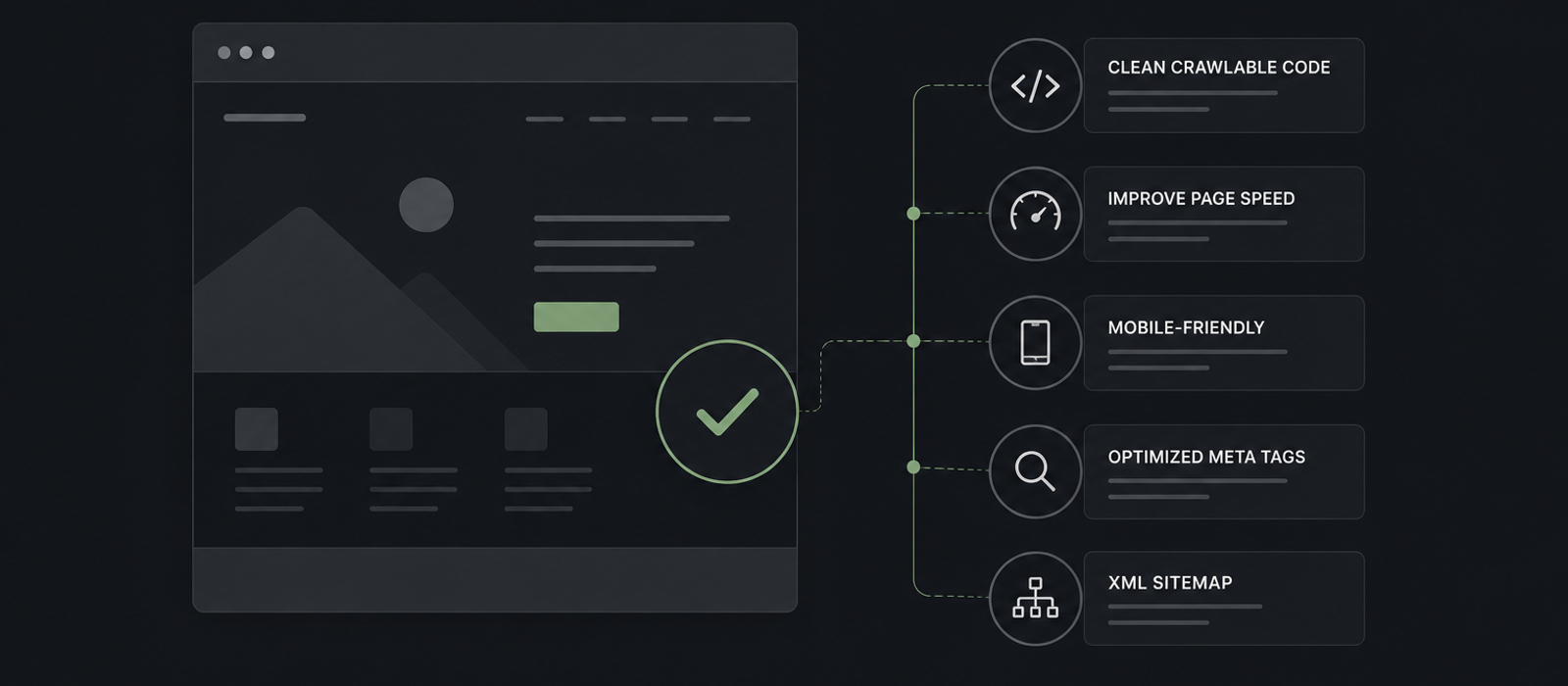
Technical SEO doesn't show up in a screenshot. It's the reason two sites with similar content and similar design can rank completely differently - one is readable to search engines the way it's meant to be, and the other is quietly working against itself.
None of it is exotic. It's a checklist of fundamentals that either got handled during the build or got skipped because nobody was specifically responsible for it.
The Basics That Get Skipped
The basics are unglamorous and easy to skip under deadline pressure:
- A unique title tag and meta description on every page, written for the page's actual topic rather than copied from a template
- One H1 per page that actually describes what the page is about, with H2s and H3s used for structure
- Semantic HTML - real headings, lists, and landmarks instead of divs styled to look like them
- Clean, readable URLs that describe the page instead of exposing an ID or a CMS artifact
Making Sure Search Engines Can Actually Find and Read It
An XML sitemap and a correctly configured robots.txt tell search engines what exists and what's off-limits. Without them, indexing depends on search engines discovering pages on their own, which is slower and less reliable.
Canonical tags prevent duplicate content from splitting ranking signal across near-identical URLs, and structured data (schema markup) gives search engines explicit context - what's a product, an article, a review - instead of making them guess from the layout.
Set Up Once, Not Bolted On Later
This checklist is part of the build itself in every Website Package and Landing Page Package project - not an add-on scoped in later once someone notices traffic isn't coming.
If a site has good content but isn't showing up in search, get in touch and we'll run through what's actually missing.